Why Dal Bhat Is Nepal’s Most Loved Meal
Imagine eating the same meal twice a day, every single day, and never getting bored of it. That’s the reality for millions of people across Nepal. And the meal at the centre of it all? Dal bhat.
It’s a simple dish. Rice and lentil soup.
But if you think that’s all there is to it, you’re missing the whole story. Dal bhat isn’t just Nepal’s national dish. It’s the heartbeat of everyday Nepali life. It’s routine, identity, comfort, and culture all served on one plate.
So why hasn’t it been replaced? Why, in a world of fast food and food trends, does this humble dish still rule the table, twice a day, every day?
Let’s get into it.
What Is Dal Bhat, Exactly?
Before we go deeper, here’s the quick version.
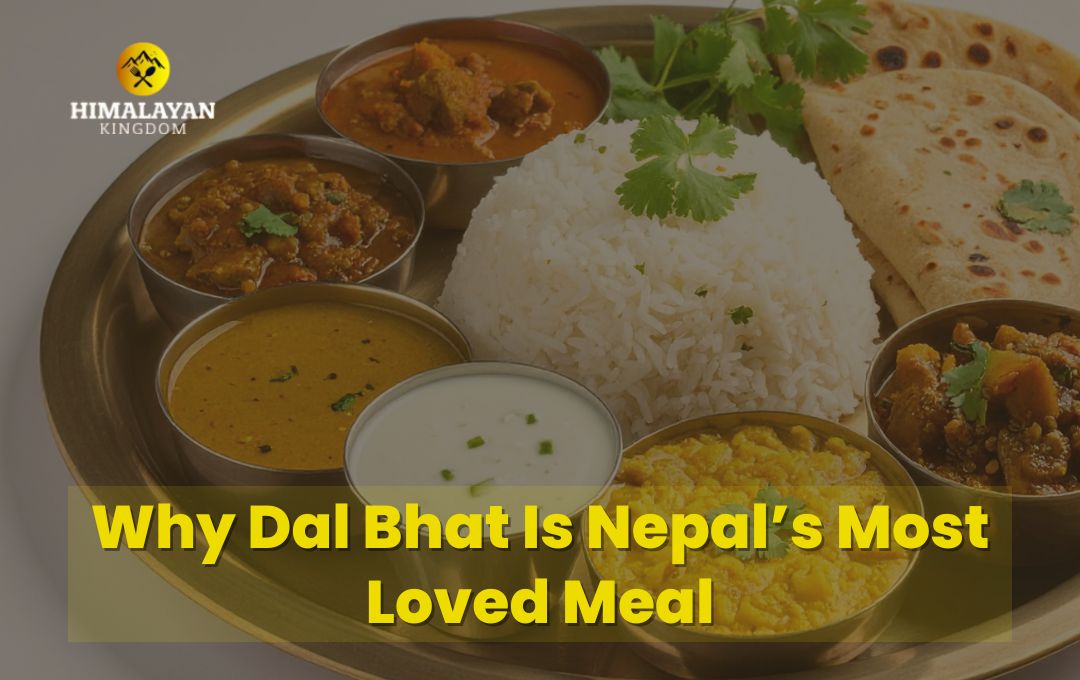
Dal bhat (also written as dal bhat tarkari) is a traditional Nepalese meal made up of:
- Bhat: steamed rice
- Dal: a warm, spiced lentil soup poured over or alongside the rice
- Tarkari: a cooked vegetable side dish
- Achar: pickle or chutney for a sharp, tangy kick
- Sometimes meat, eggs, or saag (leafy greens) depending on the region and household
Think of it like a thali: a full, balanced spread on a single plate. It’s not a starter or a snack. It’s a proper, filling meal.
Now, here’s where it gets interesting.
Reason 1: It’s Built for Daily Life
One of the biggest reasons dal bhat is eaten every day across Nepal is simple: it just works.
Rice and lentils are cheap, widely available, and easy to store. Whether you’re in a city like Kathmandu, a hill village in the middle hills, or a remote settlement in the Himalayas, the ingredients for dal bhat are never far away. That makes it incredibly practical for everyday cooking.
It’s also easy to scale up. Cooking for two? Fine. Cooking for a family of eight plus unexpected guests? No problem, just add more rice and dal to the pot.
The popularity of Dal bhat isn’t trendy. It’s popular because it fits real life, and that kind of reliability is worth more than novelty.
Reason 2: It’s a Nutritional Powerhouse
There’s a saying trekkers hear all the time in Nepal: “Dal bhat power, 24 hour.”
It sounds like a fun slogan, but it’s actually rooted in truth.
When you break down what’s on a typical dal bhat plate, you get a surprisingly well-rounded meal:
- Carbohydrates from the rice: steady, slow-releasing energy
- Protein from the lentils: essential for muscle repair and keeping you full
- Vitamins and minerals from the tarkari vegetables: particularly important for things like iron, potassium, and B vitamins
- Probiotics and flavour from the achar: fermented pickles that support gut health
This balance is one reason Nepali people (including farmers doing hard physical work and trekking guides walking for hours at high altitude) rely on dal bhat morning and evening. It genuinely fuels the body all day.
For tourists and trekkers, this is often a revelation. Many switch to dal bhat after struggling with heavier foods at altitude, finding it easier on the stomach and more sustaining than anything else on the menu.
Reason 3: It’s Deeply Cultural
Here’s where most food articles fall short: they describe what a dish is, but not what it means.
Dal bhat isn’t just what Nepali people eat. It’s how they connect.
Meals in Nepal are rarely rushed or eaten alone. Dal bhat is served to family members, shared with guests, and offered to strangers passing through. In many households, eating together around a plate of dal bhat is one of the few moments of the day when everyone slows down.
There’s also a strong tradition of hospitality woven into this meal. Offering someone dal bhat (especially with unlimited refills, which is common) is a genuine expression of welcome and generosity. You’re not just feeding someone. You’re saying you’re welcome here.
For Nepali people living abroad, dal bhat often becomes the first thing they crave when homesick. It’s not just a dish. It’s a sensory reminder of home, family, and belonging.
That’s why understanding dal bhat meaning goes far beyond the ingredients. It’s a cultural anchor.
Reason 4: It Adapts Everywhere
One of the quiet strengths of dal bhat is how much variety hides within its familiar structure.
Across Nepal’s different regions, the meal shifts and changes based on what’s local and what’s in season:
- In the Terai (the southern plains), dal bhat is often richer and spicier, with mustard greens and flatbreads common alongside it
- In the middle hills, you’ll find more seasonal vegetables, locally grown lentils, and sometimes fermented dishes like gundruk (dried fermented greens)
- In the Himalayas, portions tend to be larger and more calorie-dense to account for the cold and physical demands of the terrain
Add in variations between vegetarian and meat versions, regional spice blends, and the endless variety of chutneys and pickles, and you start to see that dal bhat is not a single dish. It’s a framework. The same foundation, endless variations.
That adaptability is a huge reason it works as a daily meal. It’s never exactly the same plate twice.
Reason 5: It’s the Ultimate Comfort Food
Ask any Nepali person what they’d want to eat after a long journey, a tough day, or a period of time away from home, and the answer is almost always the same.
Dal bhat.
There’s something deeply comforting about a meal you’ve eaten your whole life. The smell of the dal simmering, the warmth of the rice, the familiar tang of the pickle. It’s not just food. It’s reassurance.
Nepali students studying abroad, workers in Gulf countries, families scattered across continents. Many describe their first proper meal back home as dal bhat. Not because there’s nothing else to eat. But because nothing else feels quite like home.
That emotional weight is real, and it’s part of why this meal has held its place for generations while food trends have come and gone around it.
Recommended Read: Nepalese Cuisine for Beginners: Your First Taste of the Himalayas
Why Tourists End Up Loving It Too
Dal bhat has a way of winning over even the most sceptical visitors.
It doesn’t matter whether you’re a trekker on a mountain trail, a traveller exploring Kathmandu’s streets, or someone just passing through for a few days. Dal bhat tends to find you, and once it does, it sticks.
Part of it is how easy it is on the body. It’s warm, light, and genuinely filling without leaving you heavy or sluggish. For anyone adjusting to a new country, new climate, or new altitude, that matters more than you’d think.
Part of it is the value. A full, freshly cooked plate costs very little almost anywhere in Nepal. Many places even top up your rice and dal without being asked, which says a lot about the culture behind the meal.
But mostly, it’s the taste. Simple, spiced, satisfying. There’s nothing unfamiliar or intimidating about it. It’s the kind of food that feels welcoming from the very first bite.
By the end of most trips, visitors aren’t just tolerating dal bhat. They’re ordering it on purpose. And when they get home, it’s often the first thing they find themselves missing.
Dal Bhat in the UK Bringing It Closer to Home
You don’t have to fly to Kathmandu to experience it.
Nepalese restaurants across the UK, including here at Himalaya Kingdom serve dal bhat and traditional Nepalese meals that give you a genuine taste of this culture. It’s a chance to go beyond the usual curry house experience and discover what Nepali people actually eat every day.
Of course, restaurant versions may be slightly adapted portioned differently, served in a more familiar dining setting but the core of the meal remains the same. The lentils, the rice, the spiced vegetables, the pickles. And the spirit behind it: simple food, done well, with care.
If you’re curious about traditional Nepalese meals and want to understand Nepali food culture, starting with dal bhat is the right move. It’s not the flashiest dish on the menu. But it’s the most honest one.
Conclusion
Dal bhat isn’t trendy. It doesn’t have a fancy origin story or a celebrity chef behind it. It hasn’t gone viral or been reimagined as a fusion concept.
It’s just a bowl of rice, a ladle of lentil soup, and a handful of sides eaten twice a day by millions of people across Nepal, generation after generation.
And that consistency is exactly the point. Dal bhat has survived because it works nutritionally, practically, culturally, and emotionally. It’s affordable enough for everyday life and nourishing enough to fuel a full day of work or trekking. It brings people together and makes strangers feel welcome.
Most of all, it means something. In Nepal, dal bhat isn’t just loved.
It’s lived.
Frequently Asked Questions
What does dal bhat mean?
Dal bhat literally translates to “lentils and rice” in Nepali. Dal refers to the spiced lentil soup, and bhat means cooked rice. Together with vegetable sides and pickle, it makes up Nepal’s most popular everyday meal.
Why do Nepali people eat dal bhat twice a day?
It comes down to a mix of practicality, nutrition, and culture. Dal bhat is affordable, filling, and easy to cook in large amounts. It provides a good balance of carbohydrates, protein, and vegetables, which gives sustained energy throughout the day. It’s also deeply tied to daily routine and family life, making it much more than just a convenient meal.
Is dal bhat healthy?
Yes, dal bhat is considered a well-balanced meal. The rice provides carbohydrates for energy, the lentils deliver plant-based protein, and the vegetable sides add vitamins and minerals. When eaten with seasonal greens and fermented pickle, it covers most of your nutritional needs in one plate.
What is the difference between dal bhat and dal bhat tarkari?
Dal bhat refers to the rice and lentil soup base. Dal bhat tarkari simply means the full meal, with tarkari being the cooked vegetable dish served alongside. Most people use both terms to describe the same complete plate.
Can you try authentic dal bhat in the UK?
Yes. A number of Nepalese restaurants across the UK serve dal bhat as part of their menu, including Himalaya Kingdom. While the setting may differ from a family kitchen in Kathmandu, the flavours and spirit of the meal carry through. It’s one of the best ways to get a real taste of Nepali food culture without travelling to Nepal.