What Is Dosa? The South Indian Dish That Steals the Table Every Time
If you’ve never tried a dosa before, you’re not alone. Many people spot it on the menu, wonder what it is, and choose something more familiar instead. The ones who decide to give it a try usually end up asking the same question after their first bite:
Why haven’t I tried this before?
Dosa is one of South India’s most loved dishes, yet it’s still unfamiliar to many people in the UK. With its crispy golden exterior, soft centre and variety of delicious fillings, it’s a dish that surprises first-time diners and keeps them coming back for more.
In this guide, you’ll discover where dosa comes from, what it’s made of, how it tastes, which type to try first, whether it’s healthy, and how to enjoy it like a local – even if it’s your first time.
What Is Dosa, and Where Does It Come From?
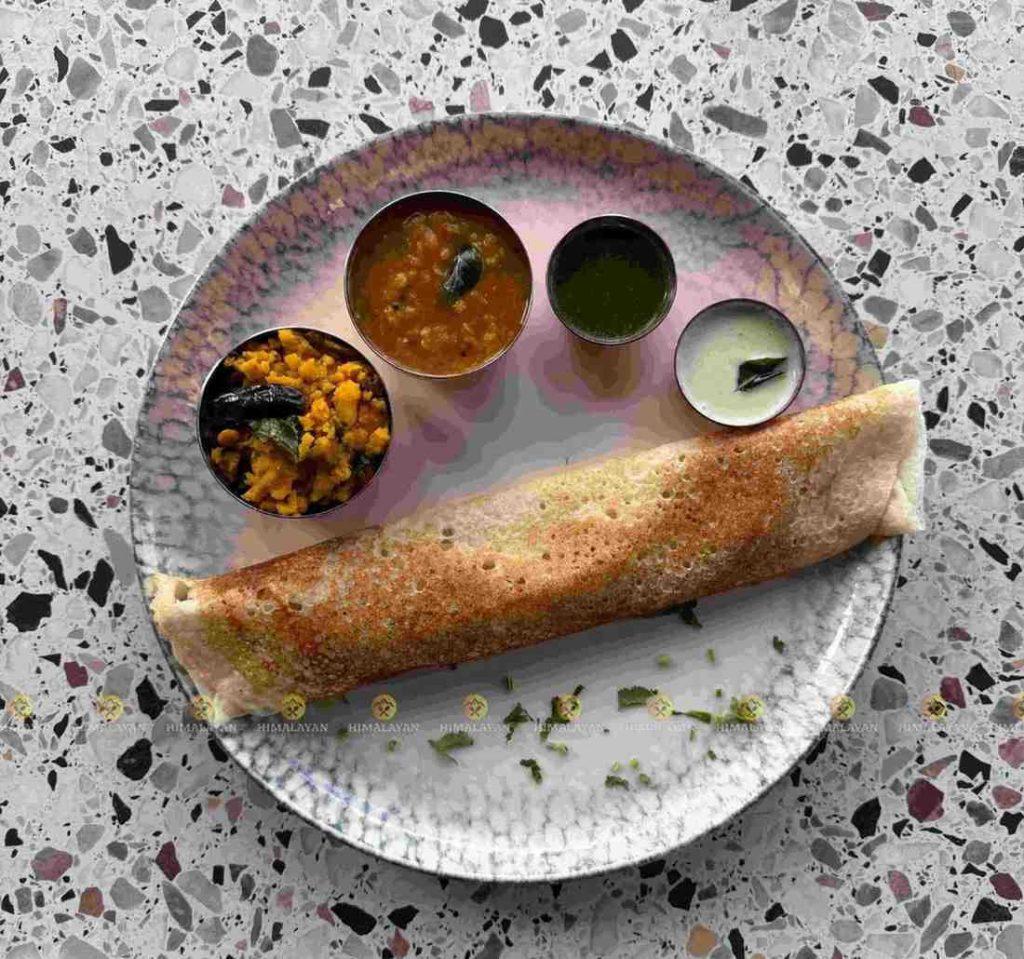
The dosa is a crispy South Indian preparation of thin flat bread prepared from fermented dough that is made by fermenting rice and urad dal (black lentils). The dosa is usually cooked fresh on a heated griddle until the edges become crisp and golden while the inner portion remains soft enough for rolling. Its light texture and mild, tangy flavor come entirely from the natural fermentation process, with no eggs, butter, baking powder, or yeast needed.
Dosa has been part of South Indian cuisine for hundreds of years and is most commonly associated with the regions of Tamil Nadu and Karnataka. Although food historians have different views on where it first appeared, there is broad agreement that it has long been an everyday staple across southern India. Despite its long history, the basic method of making dosa has changed very little, relying on rice, urad dal, and natural fermentation to create its distinctive taste and texture.
Today, dosa is loved around the world, from South Asia to the UK. At Himalayan Kingdom, every dosa is made using traditionally fermented batter and cooked fresh to order, giving it the crisp-outside, soft-inside texture that makes this South Indian favorite so memorable.
What’s Really Inside a Dosa?
The short ingredient list is one of the biggest surprises for first-timers:
- Rice – Forms the base of the batter and gives the dosa its light, crispy texture.
- Urad dal (split black lentils) – Adds protein and helps create the soft center while supporting the natural fermentation process.
- Water – Brings the ingredients together and helps achieve the smooth batter needed for an even, crispy dosa.
- Salt – Enhances the flavour and balances the gentle tang that develops during fermentation.
That’s the entire base. No eggs, no dairy, and no raising agents. The rice and lentils are soaked separately, ground into a smooth batter, combined, and left to ferment for several hours before they ever touch the griddle. Once it’s spread thin and cooked, that simple batter is what turns golden, crisp, and full of flavour – no shortcuts involved.
Why Fermentation Is the Secret Behind Every Great Dosa
Fermentation isn’t a traditional ritual you could skip – it’s the entire reason dosa tastes and behaves the way it does.
As the batter rests, naturally occurring bacteria create tiny air pockets throughout the mixture. Those pockets are what give the finished dosa its light, airy texture on the inside while allowing the outside to crisp properly in the pan. The same process also produces the gentle tang that separates real dosa from an ordinary rice pancake – and it happens to make the batter easier to digest than an unfermented mix, which is part of why dosa has stayed a daily staple across South India for generations rather than an occasional treat.
None of this can be rushed. A dosa that tastes flat or overly starchy almost always comes from batter that didn’t get the time it needed – which is exactly why the process starts long before the pan ever heats up.
Are All Dosas Made the Same Way?
Not exactly. While every dosa looks similar, the batter can be made in different ways, which changes its taste and texture.
Here are some of the most common types:
- Traditional Dosa: It is made with rice and urad dal (split black lentils). The batter is naturally fermented, giving the dosa its crispy edges, soft centre, and light tangy flavour. This is the type used for every dosa at Himalayan Kingdom.
- Rava Dosa: Made with semolina (also called rava) instead of the traditional fermented batter. It’s thinner, crispier, and has a lacy texture.
- Neer Dosa: Made from a very thin rice batter. It’s soft, light, and doesn’t have the crispy texture of a traditional dosa.
- Pesarattu: Made with green gram (moong dal) instead of rice and urad dal. It has a richer, earthier flavor and a natural green color.
At Himalayan Kingdom, we stay true to the traditional recipe by using naturally fermented rice and lentil batter for all six of our dosas, giving them the authentic flavor and texture that South Indian dosas are known for.
Which Dosa Should You Try First? A Guide to the Types of Dosa on Our Menu
Every dosa at Himalayan Kingdom starts with the same naturally fermented rice and lentil batter. What sets each one apart, and what really defines the different types of dosa you’ll find on our menu, is the filling and flavor layered on top. Whether you’re trying dosa for the first time or already know what you like, here’s a guide to help you choose from all six varieties, also listed on our food menu.
1.Plain Dosa
If you want to taste dosa in its purest form, the plain dosa is the ideal place to start. Without filling, each bite is an opportunity to enjoy the crunch, the light tang, and the subtle flavor of the naturally fermented batter. It is accompanied by coconut chutney and hot sambar. It is a simple dish that shows you don’t need a lot of ingredients to make great-tasting food that is memorable.
Best for: First-time diners, traditional food lovers, and anyone who wants to experience authentic South Indian dosa.
2.Masala Dosa
The masala dosa is the classic that has introduced millions of people to South Indian cuisine. Inside the crispy dosa is a comforting filling of lightly spiced mashed potatoes cooked with onions, mustard seeds, and traditional seasonings. The combination of crunchy dosa and soft, flavorful potato makes it the most popular choice for good reason.
Best for: First-time visitors, families, and anyone who enjoys mild, comforting flavors.
3.Onion Dosa
If you enjoy a little extra texture, the Onion Dosa is a fantastic choice. Freshly chopped onions are spread over the batter as it cooks, becoming lightly caramelized on the hot griddle. The result is a crispy dosa with a subtle sweetness and a rich aroma that adds something a little different without overpowering the traditional flavor.
Best for: Guests who enjoy crunchy textures and mild, aromatic dishes.
4. Madras Dosa
For those who enjoy a little heat, the Madras Dosa takes the classic masala filling and adds a layer of spicy red chilli chutney. The extra spice brings warmth and bold flavor while still allowing the crispy dosa and potato filling to shine. It’s a great option if you like your food with a bit more excitement.
Best for: Spice lovers looking for a bolder South Indian dish.
5.Chilli Cheese Dosa
A modern twist on a traditional favourite, the Chilli Cheese Dosa combines melted cheese with fresh chilli inside a crispy dosa. The creamy cheese balances the gentle heat of the chilli, creating a rich and satisfying dish that’s become one of our most popular choices. It’s often the dosa that wins over people trying South Indian food for the first time.
Best for: Cheese lovers, families, and anyone looking for a comforting twist on the classic.
6.Egg Dosa
If you’re looking for something more filling, the Egg Dosa is an excellent choice. Fresh egg is cooked directly onto the dosa before being finished with spicy chutney, creating a hearty meal that’s packed with flavor and protein. Crispy on the outside and satisfying in every bite, it’s perfect for lunch or dinner when you’re after something substantial.
Best for: Anyone looking for a hearty, protein-rich meal – if you want to build a bigger spread, it pairs well with other hearty options on our menu like tandoori chicken or a biryani.
Still Not Sure Which One to Choose?
If it’s your first time trying dosa, we recommend starting with the Masala Dosa. It’s the perfect introduction to the flavors that have made this South Indian favourite so popular around the world. If you’d rather experience the traditional taste of naturally fermented batter, the Plain Dosa is an equally excellent choice. Once you’ve tried one, you’ll probably find yourself coming back to explore the rest. And if dosa is your first taste of the wider menu, our guide on what to order at a Nepalese restaurant is a useful next stop.
New to Nepali cuisine beyond dosa? Our guide to Nepali thali is a great next stop if you want the full Himalayan plate experience.
What Does Dosa Taste Like?
If you’ve never tried dosa before, it’s difficult to imagine what it tastes like-and that’s exactly why so many people are curious about it.
A freshly cooked dosa has thin, crispy edges that gently crackle with every bite, while the centre stays soft enough to wrap around a filling. The flavor is light and slightly tangy, thanks to the natural fermentation process, but it’s never overpowering. Instead, it provides the perfect base for the ingredients served alongside it.
The dosa and chutney pair can make or break the experience. The coconut chutney offers a fresh, creamy contrast, and a bowl of warm sambar adds a rich, mildly spiced flavor. Each filling, whether it be the classic spiced potato masala, caramelised onions, cheese, green chilies, or egg, gives the dosa its own unique character, and each variation tastes a little different but maintains its signature crisp texture and subtle tang.
Dosa vs Idli: What’s the Difference?
Dosa and idli are both made from a fermented (rested) batter of rice and urad dal (split black lentils), but they taste and feel completely different. The biggest difference is how they’re cooked.
Dosa is prepared by spreading it thin over a hot griddle (tawa) and cooking it to become crispy, whereas idli is steamed to make it soft and fluffy. In case you like crispy food items, then dosa will definitely be your cup of tea, while if you like soft things, then idli is the perfect thing for you.
What Mistakes Do Beginners Make When Eating Dosa for the First Time?
Trying dosa for the first time is part of the fun, but there are common mistakes many people make that can stop them from enjoying the full experience.
When beginners start eating dosa, they usually save the chutney for the end. The thing is, you should be eating the chutney with the dosa the whole time. Some people only eat the parts of the dosa and do not eat the soft part in the middle. The soft part is really good because it has the filling, which makes the dosa taste even better. To really enjoy the dosa, you should try to eat a bit of everything in one bite, including the dosa, the chutney, and the filling.
Many first-time diners are also surprised by the size of a dosa. Although it looks large when it arrives at the table, the thin fermented batter makes it much lighter than it appears. Perhaps the biggest mistake of all is skipping dosa because it feels unfamiliar-it’s often the dish people end up wishing they’d ordered first.
How Much Does a Dosa Cost?
Dosa is an affordable and satisfying meal, with prices varying depending on the filling you choose. At Himalayan Kingdom, prices start from £8.95 for a Plain Dosa and go up to £10.95 for specialty options. Every dosa is served with freshly made coconut chutney and warm sambar for a complete South Indian dining experience.
For the latest prices and menu updates, please check our current food menu before visiting or ordering.
Where Can You Try Authentic Dosa in Hale, Altrincham?
If you’re looking for authentic South Indian dosa in Altrincham, Himalayan Kingdom serves six freshly made varieties, all prepared with traditionally fermented rice and lentil batter and cooked to order. From the classic Masala Dosa to the spicy Madras Dosa, the indulgent Chilli Cheese Dosa, and the hearty Egg Dosa, there’s a dosa for every taste.
Every dosa is served with coconut chutney and warm sambar, whether you choose to dine in,
Ready to try one? Visit Himalayan Kingdom and discover why dosa has become one of South India’s most loved dishes.
Looking for Dosa Near Me in Hale and Altrincham?
If you’ve searched for dosa near me hoping to find an authentic plate nearby, Himalayan Kingdom is one of the closest places to enjoy proper South Indian food in the area.
We’re based at 4 Crown Passages, Hale, Altrincham, WA15 9GN, a short trip for anyone searching for dosa in Hale, Altrincham, or the surrounding villages, and we’re proud to be one of the go-to dosa restaurants near me for locals who want the real thing rather than a quick imitation.
Every dosa is made fresh to order using traditionally fermented rice and lentil batter, so whether you’re after dosa for breakfast, a quick lunch stop, or dosa for dinner with the family, you’re getting the same crisp, golden result every time.
Follow Himalayan Kingdom on social media channels such as Facebook, Instagram, YouTube, and TikTok for the latest updates and news.
Frequently Asked Questions
What Is Dosa Made Of?
Traditional dosa is made from rice, urad dal (split black lentils), water and salt. After the batter has fermented, it’s spread thinly onto a hot flat pan and cooked until it is crispy around the edges and soft in the middle.
Is dosa gluten-free?
Yes. A traditional plain dosa is naturally gluten-free because it’s made with fermented rice and urad dal (split black lentils), not wheat. If you have coeliac disease or a gluten allergy, it’s always a good idea to ask the restaurant whether steps are taken to prevent cross-contamination during preparation.
Which dosa is best for beginners?
The masala dosa is the most popular choice for beginners thanks to its crispy texture and lightly spiced potato filling. If you want to enjoy the authentic flavor of the batter, the Plain Dosa is another excellent option.
Is dosa healthy?
Yes, Dosa can be a healthy choice as it’s made from naturally fermented rice and urad dal (split black lentils), providing energy and plant-based protein. The overall nutrition depends on the filling and how it’s served.
Is dosa suitable for vegetarians?
Yes. Our Plain, Masala, Onion, Madras, and Chilli Cheese Dosas are all vegetarian. The Egg Dosa contains egg.
Can I order dosa for takeaway or delivery?
Yes. All of our dosas are available for dine-in, takeaway and delivery, so you can enjoy them wherever you like.